
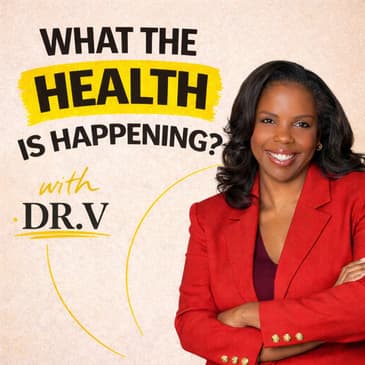
Welcome to the podcast, hosted by Dr. Valda Crowder , board-certified emergency medicine physician dedicated to empowering you with life-saving health information. In this episode, Dr. Valda Crowder tackles the urgent and often hidden issue of sex trafficking in plain sight. From high-profile media cases like Jeffrey Epstein and R. Kelly, to the tragic reality affecting millions, especially children and vulnerable communities, Dr. Valda Crowder breaks down what sex trafficking is, how victims are lured, and why it's a pressing public health crisis occurring all around us. You'll learn to spot the warning signs, hear real-life stories from the front lines, and get answers to your most important questions about protecting your loved ones and community. Tune in for crucial knowledge, practical tips, and resources to help stop this epidemic hidden right within our neighborhoods.
Timestamps:
00:00 Introduction to sex trafficking issues
04:25 Discussing trafficking victim identification
08:20 Raising awareness on sex trafficking
12:34 Child protection and warning signs
14:02 Identifying signs of trafficking
20:28 Online safety and family links
21:29 Signs of potential predatory behavior
Dr. Valda Crowder - https://www.askdrv.us/
Podcast Website - https://whatthehealthishappeningshow.com/
Podcast Producer - https://tophealth.care/
“Disclaimer: Informational only. Not medical advice. Consult your doctor for guidance.”
Hello, and I am your host, Dr. Valda Crowder, also known as Dr. V, and I'm a board certified emergency medicine physician who is committed to empowering you with life-saving health information. So make sure to subscribe, like, comment, and follow on my podcast or as well on any of my social media outlets or YouTube channel. All right, so today we are going to talk about sex trafficking hidden in plain sight. This topic is sensitive, so if you think that you might be triggered by this or it's not appropriate for um the audience that you're sitting around, you can feel free to disconnect now. This has been a very, very big topic in the news. There have been a lot of high-profile cases, such as uh the Jeffrey Epstein case, which really seems to be probably the most prolific sex trafficking case uh that we are actually aware of. Where basically, as a a wealthy financier, supposedly, um, and I use the word supposedly because um he was actually a college dropout, but it has for years and decades run uh run a very, very large sex trafficking network involving underage children. And we've also seen the world uh rocked in politics, finance, and entertainment. We've seen cases involving uh RB singer Art Kelly, movie mogul Harvey Weinstein, and these are just these are just a few. While you know, these cases are very and situations are very, very tragic. You know, I think that we we never hear about the majority of sex traffic cases that are really hidden behind the shadows. And they are really closer to you and your community and your family than you know. And I want to try to talk about this a little bit. Today we're gonna talk about sex trafficking beyond the news. And the sad reality is that this is really a public health crisis that is happening every day, and it's in plain sight within our communities, our neighborhoods, and our families. So let's start with what is sex trafficking? So basically, it is a form of modern slavery in which individuals are compelled to perform commercial sex acts through fraud, force, or coercion. When the victim is a minor, it is considered to be sex trafficking, whether or not force is used or not. And this is the US definition uh through the Trafficking Victims Protective Act. So, how big is this thing? So it is estimated that about six million people worldwide are sex trafficked. I want everybody to get their hands around heads around that. Six million people worldwide, and about a third of them are children. So we're talking about two million children worldwide that are exploited by uh a commercial sex trade. The laws in the United States, specifically the Trafficking Victims Protection Act, um, did set up a national human trafficking hotline that uh has been set up since about 2007 and has identified over and helped over 50,000 trafficking victims. That phone number 888-373-7888. 888-373-7888. If you are listening to this show and you feel like you're a trafficking victim, or if you know someone that is a trafficking victim, you want to make sure to call that to call that number. At any uh given point in time, there are about a million victims of sex trafficking in the United States. There are certain hotspots. Um currently they get more phone calls from California, Texas, Florida, New York, which kind of makes sense because these are sort of major hubs of transportation. The average age for entering into sex trafficking is estimated to be between 12 and 14 years old. When you actually look at the victims of uh sex trafficking um that are in homeless uh shelters or trafficking programs, there is an overrepresentation of LGBTQ plus youth. They normally account for about 40% of victims that are actually in these programs. Obviously, we don't know, there's so many victims that are unidentified, we don't know how represented they are in the whole. It is estimated that one in 100 trafficking victims is actually identified and helped. So this is really important because that means like 99 out of 100 victims are never ever identified. So, sex trafficking and those that engage in sex trafficking are it's is a very s sophisticated operation. I want to talk a little bit about some of the methods that are used to lure victims. So, one of the main methods that is used to uh lure victims is sort of the lover boy or Romeo method, and that's where the trafficker poses as a romantic partner, may shower the victim with attention and gifts and affection before introducing the exploitation. Um, this is a very, very common method that is used by teenage girls, and they recruit primarily on social media and online Instagram, Snapchat, TikTok, gaming platforms, etc. Um, sometimes the traffickers are creating fake profiles. Uh they may also act like they are the same age as the victim, and they create a relationship that can be over uh weeks or months. The other way that they lure in victims is with job offers. And so this is often individuals that might be in economically vulnerable situations. They might be promised modeling contracts, waitress jobs, nanny positions. Um, they may be provided uh these positions are in different cities or maybe even in different countries. Once trafficked to these different geographic areas, they are away from their family, they are away from their social support. Um, they may not even speak the language. Family-based trafficking. Uh, we have some victims that are trafficked by their own family members. And again, this is usually children in households that are dealing with either extreme poverty or addiction. Families sell their children for money, they sell their children for drugs. We also see um what we call sex trafficking involving surviving children of like runaway or homelessness. So those are those those children can also be uh ones that are aging out of foster care or near aging out of foster care. And they're specifically targeted because they have uh they don't have as much of a support system. And then we also see drugs as a control tool, um, where traffickers actually introduce victims to drugs, begin to create a dependency, which then is used as a leverage or control. So as you can see, this issue really, really runs far and wide. All right, so now I'm gonna go into news you can use, and the news you can use is actually why I'm talking about this topic today. So um our first lady, Melania Trump, uh, gave a speech that really propelled the whole Jeffrey Epstein crisis back into the forefront, flanked by U.S. flags, and her first sentence was the lies linking me with this disgraceful Jeffrey Epstein need to end today. With those words, the Epstein crisis that has plagued the president once again was in the forefront and at the center of intention. The first lady seemed to be very uh dismayed over the issue, and this prompted her abrupt decision to publicly address it. You know, she appeared in her remarks to actually insist that she had nothing more than a casual correspondence and relationship with Jeffrey Epstein and Ghlaine Maxwell. Now, we all know that there are many photos of the Trumps, uh both Donald Trump and uh Melania Trump with Epstein that we have all seen with our own eyes. And hopefully the entire truth will come out very soon. But one thing that I actually do agree with the First Lady about is that victims should be allowed to speak under oath before a congressional hearing. And let me tell you what that would actually do. One is it's very important for these women who have had their stories uh attempted to be erased or overwritten. It's very important for them to be heard. But more important, I think, is that you know, sex trafficking is a very pervasive plague in our society, and many people don't understand to what extent this actually exists in our society. And I think that having congressional hearings would actually allow this to come to the forefront so people can have a better understanding of how this impacts people in their communities and how to protect themselves and their families from sex trafficking. I also think it's very important for them to understand and for all of us to understand how these systems sometimes fail. And we need to strengthen, uh we need to strengthen our systems so they actually work for everyone. All right, so there are a group of professionals that are trained to actually spot and identify all types of abuse, neglect, coercion, including sex trafficking. And those are teachers, people in the transportation industry, whether or not it's uh the uh airline flight attendants, people that are on the buses and the trains, and those of us in the medical profession. So nursing, physicians, and we are what they call mandatory reporters. So let me tell you what a mandatory reporter is. We are required legally to report suspected abuse or neglect or exploitation whenever we see it at the time that we see it. No waiting until tomorrow morning, no let me think about it. We have phone numbers that we actually can call 24 hours a day, seven days a week. So I want to share with you a little bit about how this system sometimes fails, and I'm gonna share with you um a case from the emergency department that I had a long time ago that still really, really bothers me. So I had a child come to the emergency department with her father, and there was a very odd interaction between this child and her father. Specifically, the father was almost acting like the child was his possession. And, you know, uh we often see in the emergency department demonstrations of love and affection, but this was something that was distinctly different and odd. And for that reason, um, I don't even remember the complaint that the patient came in for, what he brought the patient in for. But for this reason, I decided to do a little bit more lab tests than what I would normally do on um on the patient, on the child. So when I did those lab tests, um I did some blood work and I also did a urine analysis. Um and I got a call from the lab. And the lab said, Um, Dr. Crowder, we've got something here that is very uh odd. And I said, Sure, what's going on? They said, Well, in the urine analysis, we are seeing swimming sperm. And this child was six months old. Six months old, and we are seeing swimming sperm in the urine. Now, I have to say I was really, really taken back. So I actually went to the lab myself and I decided to actually look under the microscope myself because I wanted to make sure that this wasn't like a lab tech era. So I went to the lab myself, and sure enough, that is actually what we saw. So uh as a mandatory reporter, uh, we reported this. Um, in addition, I did some additional uh testing on the child for STDs, et cetera, which I've never had to do STD testing on a six-month-old. And so uh child protective services came in. Uh they will come into the emergency department when there are uh significant cases. Um, in some cases, what happens is we admit the patient while they work things out. So, anyhow, child protective services came in and they uh temporarily placed the child with a family member, another family member, and they investigated the case over a period of weeks to months. So I followed back up and I wanted to find out what happened to this six-month-old child. And um the unfortunately, child protective services actually allowed the six-month-old child to go back to her father. And they said that the father gave some reason that was reasonable to them that he was pleasuring himself and changing her diaper, which really didn't quite make sense to me. And it probably doesn't even make sense to you as I'm telling you this. It it to me it was a very, very unfortunate outcome of a situation of a child that actually really did need our help. So I I I share this story to remind people that even when these cases really are presented to the proper authorities, um, I don't think that our authorities have enough accountability, enough resources to actually do what they need to do to protect our children. All right, so I want to go over some warning signs that community members and medical professionals should be aware of. So for everyday people, you know, when there are people that are disoriented or don't know their address or seem to be coached into responses. Also, um, when people are not allowed to speak for themselves and someone else is always answering questions for them. I see this in the emergency department. I always say I need to hear from the patient directly. If there's any signs of abuse, bruising, malnourishment, branding, or tattoos that actually indicate ownership. Also, if you have a younger person with an older boyfriend, much older boyfriend, or older manager who seems to control their money or control their movements, someone who's living with a lot of people in cramped spaces and who works excessive hours, a minor that is receiving any sort of um significant or expensive gifts, phones, jewelry that they can't particularly um explain. For those of us that are in the medical profession, um whether or not it's uh techs, nurses, uh physicians, uh nurse practitioners or PAs, um, we look for um a lot of different things. We look for, as I said, sexually transmitted, sexually transmitted diseases, uh repeated pregnancies in a young person, any signs of of physical trauma or sexual trauma that is inconsistent with the person's explanation. Someone who's accompanied by someone who's very controlling and won't leave the room is acting oddly. That's actually what was occurring in the situation that I had with this six-month-old. Anyone that's avoiding eye contact and gives um really scripted answers or seems uh fearful. Also, people who show up with no insurance, no ID, and no consistent address, right? So these are situations where um the person has kind of almost been like ghosted or taken out of the out of the system. Um the other thing that we look for is people with persistent anxiety, PTSD, a substance dependency with no real clear history. Um, and then again, branding, tattoos, um, burns, or anything that may indicate uh some type of ownership or rituals or something along that line. To hear more about today's topics and other critical health issues, listen to my podcast, What the Health is Happening. That's the real question. It's the name of my new podcast, and it's literally where you can get life-changing medical information. So, what the health is happening gives you the inside scoop on all sorts of health matters and empowers you with information on everything from breaking news to important medical updates. What the health is happening is your dose of medical reality with me, Dr. V, and my friends from the front lines of healthcare. You can hear it on all podcast platforms, and you can download, subscribe, and comment. All right, thank you. All right. The other thing that we just recently started this week was we started a video podcast. So you can also see the video podcast on all of those podcast networks. All right, let's get into some questions. I've got some questions that were sent in. I got a question from Rona, and Rona said, I don't what exactly is the difference between sex trafficking and prostitution? So it seems that sometimes when they're talking about sex trafficking, they're also talking about prostitution, and I'm a little confused about what is the difference between the two. All right, Rona, so great question. So um so a couple of things is that prostitution can be voluntary or involuntary. But in general, when someone works in prostitution, they're relatively independent, right? There is not a coercion or exploitation component of it. In addition, prostitution in some countries and also in some jurisdictions is legal. And prostitution never involves a minor. So any involvement of a minor at all categorizes it as sex trafficking. Sex trafficking is actually very different. So whether or not you're dealing with a minor or an adult, sex trafficking involves like control, uh, manipulation, um, some degree of force or influence. It may involve physical threats of violence, um, with people getting beat up. It can also involve threats related to money. You owe me, you won't live like this anymore without me. There is also some psychological control, usually. And so one of the things to recognize in sex trafficking is sex trafficking is always someone else profiting at the victim's exploitation, no matter how they may, how that may be occurring. They they're they're always they're always profiting at the victim's uh expense, which is very different from prostitution, which can involve adults, it can be voluntary, and it can be legal. So I think that that's that's very, very important. All right, next question, and this question is this question is from Gloria. She said, at what at what age should we be teaching our kids and grandkids about sex trafficking? Um, so I tell people as early as possible, I think it's really, really important that when you start teaching your kid the name of their nose or what their fingers are or what their ears are, that you also teach them about their body parts and use the correct name and teach them how you know people can look at your your nose, but they can't look at your private areas. You want to actually have those conversations when you are teaching kids the names of their of their body parts. And I think that from there the conversation can actually evolve. So I think it's really, really important that this become socialized and spoken about at a very, very early age. So we're talking about four and five years old, certainly um pre-K to K, because once once a child actually gets into the school system, they're developing different friends, they may be going over to other people's houses, and they need to understand what's appropriate and what's not appropriate. Thank you for the question. All right, my next question is from Donna. Donna says, My teenager is very active on social media. What are the red flags uh that I should look for online? This is really important. A lot of the grooming for sex trafficking occurs online. And what happens is people who are trafficking young adults and minors will actually work to groom them online for months to years. And the young person will think that this is somebody they really know because of their prolonged engagement with these with these people online. Sometimes the person that is grooming people online will pretend to be the age of the child and will pretend to talk in the same manner that children actually talk talk in. So this is really, really important. I would say the first thing you want to really make sure is that you actually have a family link. So on all the iPhones and all the Google phones, you can have a family link. And that family link allows you to actually see what your child is seeing. And it's very important to check in here and actually know what is my child actually looking at, who are they actually communicating with? And you want to actually, if you have any child that is on an iPhone or a Google phone or any sort of a smartphone, you want to make sure that you have a family link and you check that family link frequently. The other things that you really want to be careful and be really um keep your eye on is a child that is hiding their screen or quickly closing apps, or they're suddenly getting gifts or certain opportunities. When you listen to what happened with with the Epstein Files, there was a lot of, oh, we're gonna bring you into the country with this modeling contract. Um, he was getting girls into dental school. So, so a lot of things around, oh, I'll do this for you, get you certain opportunities. Um, you also want to Look for any fast emotional connections with a boyfriend that then leads people to begin to sort of pull away from their family or pull away from their social structures. This is really, really important. So these are all the sort of things that I would say would be important to actually look for. But from the very beginning, before you actually experience these things, you really want to make sure that you have a family link set up and that you are actually seeing what your child is seeing. If I suspect that someone is a victim of sex trafficking, what should I do? All right, great question. So we talked about the National Human Trafficking Hotline. So I'm gonna actually read out that number again. The National Human Trafficking Hotline is 1-888-373-7888. That's 1-888-373-7888. In addition, you can text HELP to 233-733. You can text HELP to 233-733. If you want to just learn more about this topic, there is a human traffickinghotline.org, uh, human traffickinghotline.org, and they do have a lot of information on their website. If you want to just sort of learn more in general about this topic, but this is really hidden in plain sight. This is around us all over the place. All right, so I want to thank you guys for joining me today. I know this was uh not a really easy topic uh to talk about, but I think it was a really important topic to talk about. I'm really committed here to answering uh your most pressing healthcare questions on all a variety of various things. If you actually have a topic that you would like to hear on this show, make sure to email me at info at askdrv.us. That's info ataskdrv.us. Also send me questions there. People send me questions there all the time. And make sure make sure to follow me on uh YouTube. My YouTube channel is AskDrV. I'm also on Twitter, Instagram, and check out the podcast, What the Health is Happening. It's on all streaming platforms. It doesn't matter if it's Audibles or Spotify or Apple Podcasts, it's all over the place. I look forward to uh talking to you next week. I want to thank you guys for uh joining us for this conversation. I know it was a difficult conversation, and next week we will be back where you can be informed and empowered about your health.