
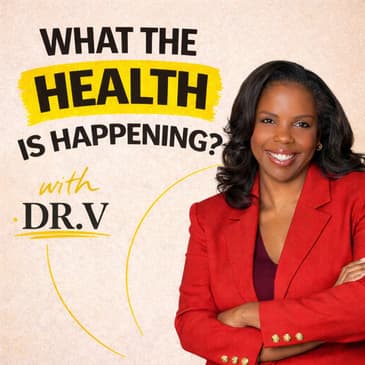
Marijuana and CBD are everywhere these days, from dispensaries on every corner to gummies, drinks, and oils marketed for everything from sleep to stress relief. But as these products become increasingly normalized, what’s really happening behind the scenes in healthcare? In this episode of "What The Health Is Happening" with Dr. V, we’re joined by Dr. Valda Crowder, an emergency room physician, to break down the crucial differences between marijuana and CBD, the impact of different formats and dosages, and what she sees on the front lines. From real medical uses to risks like cognitive decline, cannabinoid hyperemesis syndrome, and accidental ingestion by kids, this conversation sheds light on the realities, and cautions, behind these increasingly common substances. Whether you’re a consumer, a parent, or just curious, this episode delivers the unfiltered facts you need to know.
Timestamps:
00:00 Understanding THC product dosages
05:54 Concerns about early marijuana use
07:11 Cyclic vomiting from heavy marijuana use
13:37 CBD uses and dosage advice
16:58 THC levels in modern marijuana
20:02 Keeping edibles out of kids' reach
23:40 Using marijuana for medical purposes
24:24 Discussing health product awareness
Marijuana vs CBD: What You Need to Know from the What the Health is Happening Podcast
Curious about the real differences between marijuana and CBD? The second episode of "What the Health is Happening" with Dr. Valda Crowder tackles this increasingly relevant topic. As marijuana and CBD products become more common and readily available, understanding the science and risks behind them is more important than ever. Here, we break down the episode’s key insights to help you make informed decisions.
Marijuana and CBD: Not the Same Thing
One of the biggest takeaways from the episode is that marijuana and CBD, while often lumped together, are very different. As Dr. Valda Crowder explains, CBD can be derived from both marijuana and hemp, but it is non-psychoactive. This means you do not get the “high” associated with marijuana use. CBD is federally approved across all states, primarily because it lacks mind-altering effects. In contrast, marijuana contains THC, which is the psychoactive compound responsible for the high sensation. THC’s presence also makes marijuana’s legal status vary from state to state.
How Different Formats Impact the Body
Gummies, cookies, drinks, vapes, and lotions, marijuana and CBD products come in many forms. But how does the format affect risk? According to Dr. Valda Crowder, it is less about the type of product and more about the concentration of the active ingredient inside it. Some edibles contain just 2 milligrams of THC, while others can have 50 milligrams or more. This variance can surprise users, sometimes leading to severe effects that show up suddenly, even sending them to the emergency department. She also warns that products like brownies and cookies seem harmless, making it easy for children to accidentally consume large doses.
Medical Uses vs. Recreational Risks
There are legitimate medical uses for marijuana and CBD. Dr. Valda Crowder supports marijuana for chemotherapy-related nausea, appetite loss, and spasticity in MS patients. CBD, on the other hand, is sometimes used for managing seizures. However, she cautions that recreational use, especially beginning at a young age, is risky. The brain is still developing until around age 25 or 26, making early and frequent use a potential trigger for cognitive issues, like memory loss and diminished decision-making skills.
The Rise of Cannabinoid Hyperemesis Syndrome
A surprising condition discussed is cannabinoid hyperemesis syndrome, or cyclic vomiting. Chronic marijuana users may experience uncontrollable vomiting that sometimes requires medical intervention, as described by Dr. Valda Crowder. This syndrome has become increasingly frequent and often affects users in their 20s who consume marijuana heavily, up to four times a week or more.
Long-Term Cognitive Effects and Emergency Room Trends
What about long-term effects? Frequent marijuana use, especially that begins early, can look like early dementia: short-term memory loss, lower IQ, and problems with executive functions like reasoning and planning. Dr. Valda Crowder sees these consequences in the emergency department every day, reinforcing that just because marijuana is legal or natural does not make it harmless.
Protecting Kids and Staying Safe
One of the most urgent messages is preventing kids from accessing these products. Edibles often look like treats and can cause severe illness in children who get into them by accident. Labeling and proper storage are critical, as is avoiding underage use altogether since the brain is especially vulnerable.
Guidance for Consumers
For those choosing to use marijuana or CBD recreationally, the podcast recommends being informed about dosage and quality. Most emergency cases come from people who do not actually know what or how much they have taken. Read labels, ask questions, and remember that higher THC concentrations are now more common due to modern farming practices.
The Bottom Line
"What the Health is Happening?" emphasizes that while marijuana and CBD may have a place in medicine, recreational use is not risk-free. Parents should be especially vigilant and everyone should seek professional guidance if considering medical use. Stay tuned to the podcast for grounded discussions that go beyond trends, giving you the clearest possible lens on your health choices.
Dr. Valda Crowder - https://www.askdrv.us/
Podcast Website - https://whatthehealthishappeningshow.com/
Podcast Producer - https://tophealth.care/
“Disclaimer: Informational only. Not medical advice. Consult your doctor for guidance.”