
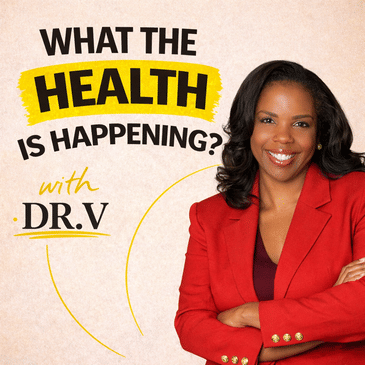
As the days grow shorter and sunlight becomes scarce, many people experience more than just the winter blues. In this episode, we explore Seasonal Affective Disorder (SAD)—a form of depression that follows a seasonal pattern and can significantly impact mood, energy levels, sleep, and overall well-being.
Join Dr. Valda Crowder aka Dr. V as she discuss:
- What Seasonal Affective Disorder is and how it differs from typical seasonal mood changes
- Common signs and symptoms to watch for
- Why reduced sunlight affects mental health
- Evidence-based strategies to manage SAD, including lifestyle changes, light therapy, and mindfulness
- When to seek professional help
Whether you’re personally struggling with seasonal changes or caring for patients, loved ones, or colleagues who are, this episode offers practical insights, compassion, and hope.
✨ Tune in, take care of your mental health, and remember—you’re not alone, even in the darker seasons.
Hello and welcome. This is where you can be informed and empowered about health issues that affect you and your family. So today I'm your host, Dr. Valda Crowder, also known as Dr. V. And today we're talking about seasonal affective disorder, also known as SAD. And as we move deeper into the winter and the days grow shorter, many of us notice changes in our mood and our energy level. And for some people, you know, this isn't just a minor inconvenience. This isn't just uh uh the winter blues, it's a little bit more than that. And so I wanted to kind of go over what is this, what is it called, how do you know if you have it, what can you do about it, etc. Um, and this is something actually that I've been impacted by. Um, and I'll share with you sort of uh what I do every time the winter time rolls around. So the name of the meta of the medical condition is called seasonal affective disorder. Um, and some people just call it sad. And basically, sad is a type of mood disorder that follows a seasonal pan pattern. So it normally starts around um the fall and winter time uh when the days begin to get shorter, and um what happens, and they also seem to get a little bit grayer and things seem to be a little bit uh uh darker. Um, and so um you notice it when daylight gets or sunlight gets more scarce. Um, this is something that impacts millions of people. Um, it can cause a low mood, fatigue, difficult difficulty concentrating. Um, some people get changes in their sleep pattern and they um uh sleep a lot. Um some people actually withdraw from social activities, um, and some people get sort of cravings, carbohydrate, and can get a lot of weight gained during the winter time. Um, so for those that are actually living with seasonal affective disorder, it can really affect um relationships with your family, uh relationships with your work, um, your ability to actually work and get things done, and uh your overall quality of life. So I want to actually talk about this because often people kind of really dismiss this and they or they minimize it, and and they'll say, Oh, you know, you just kind of have to pick yourself up, or um, you just have the the with the the winter the winter blues or the winter will be over soon, um, or you get like this every year, don't worry about it, it'll pass. And so, you know, some people who actually experience this may think they just kind of have to tough it out in the winter time, and and that everybody gets a little bit down in the winter time, but this is actually something that you can do something about and something that you can make a difference in relatively easily. So, seasonal affective disorder is a legitimate disorder with biological roots, and it is very, very, very treatable with very, very natural treatments. So, understanding the science behind it and recognizing the symptoms and knowing what help is available can really, really make a difference in how someone actually goes through these darker months of the year. So, listen in and let's discover what's really happening in our bodies and minds during the wintertime and more importantly, what we can do about it. If you're listening to this topic and you have and you want to actually reach me, and uh maybe you or your family members or someone else have been affected by seasonal affective disorder, or maybe you want to talk about something else. It really doesn't matter. Um, you can also email me, and people do email me uh questions at info at asdrv.us. That's info at asdrv.us. I'm here for you. This is the time to take advantage of some accurate information on what are some options. What the health is happening, that is a real question, and it's also the name of my new podcast where you can literally get life-changing advice. What the health is happening is where we give you the inside scoop on health matters and empower you with information related to all types of breaking news and medical updates. What the health is happening is your dose of medical reality with me, Dr. V, and my friends from the front lines of healthcare. We are now available on all streaming platforms, so you can download us, subscribe, or comment. All right, let's get back to our conversation about seasonal effective disorder. All right, I have some people that have emailed me some questions at info at askdrv.us, you can do the same. And I want to go over some of the things that they have asked me about specifically about seasonal affective disorder. I had someone who asked me, what are the telltale signs that someone might be experiencing seasonal seasonal affective disorder rather than the winter blues rather than depression? So this is really this is really important. The winter blues is not is not a is not an official diagnosis. I think, you know, when people say the winter blues, they're really talking about seasonal affective disorder. So to me, the winter blues is just a uh a common name that people outside of medicine cause seasonal call call seasonal effective disorder. So there's a couple of differences though between seasonal effective disorder and depression, because it's really not the same. Seasonal affective disorder specifically is seasonal. That is the first thing. So it normally comes in the fall or the winter time, and then it usually leaves in the springtime. If someone has depression, that can come any time of the year, and it doesn't reoccur every year at the same time of the year. So the first thing about seasonal affective disorder is it has some seasonality associated with it. The other thing is that seasonal affective disorder specifically causes people to be fatigued, it causes them to oversleep a lot, they may have an increase in their appetite, they may really, really desire carbs, and it's also associated with um weight gain. Whereas depression is often associated with insomnia where you can't sleep, a decrease in appetite, sometimes a decrease in weight loss. Um, and the other thing is that seasonal effective disorder, and I'll talk about it a little bit, but you treat seasonal effective disorder with light therapy, and I'll go over that in a little bit. But if you have depression, whether or not you're in the sunlight or not, or whether or not it's a sunny day, will not make a difference at all. So that's one of the main differences between um seasonal affective disorder and um and depression. All right. So Tanya from uh Bowie said, what causes seasonal effective disorder? Is it purely the reduced sunlight or are there other biological factors at play? So there's a lot of things that actually um cause seasonal effective disorder. So the but the the the main so so the main thing is that you know our body is connected to our environment through our brain and primarily through our eyes. So when it's sunny versus when it's dark, uh the retina in your eyes actually is the one that captures that light. And then based upon the amount of light that it's capturing, there are then certain things that the brain does or does not do. So when you have decreased sunlight that is hitting your retina, then the brain produces less serotonin. So when you have less serotonin floating around in your brain, then you're going to have more fatigue, be a little bit down, those sorts of things. The other thing that happens when you have less sunlight hitting your retina is that your brain will actually produce more melatonin. And, you know, a an excess of melatonin really increases your desire to kind of just hibernate. Like you really don't want to do anything. You don't want to be around anybody, you just want to just cocoon up someplace. And then the other thing, too, is that there is sort of like a disruption of the circadian rhythm that occurs when you have a very, very early sunset and then a late sunrise, and it kind of confuses the brain and it decreases your mood. Um, and that's kind of what causes it. Um, we do know that um some people are impacted by seasonal affective disorder, and they have other family members that are affected by seasonal disorder, seasonal affective disorder. So we do believe that there is some also some biologic relationship as far as how you actually uh handle this. Um next question is from Kayla. Kayla said, I literally become sad every year, but by January I feel like it rolls into severe depression. Is there a medical way to prevent it? Generally speaking, I want to know how long do sad symptoms typically last and can people experience it during other seasons. So seasonal affective disorder is specifically related to the winter months. So it is something that is specifically fall and winter related. Um and um if people find that it is carrying on into the spring and summer, then that would make me believe that they have more of a depression rather than a seasonal effective disorder. Um, and so and how do you prevent it? So let me talk a little bit about how to actually um treat it because this is really, really important. So light therapy is critical with um with seasonal effective disorder. And they have these lamps and they simulate the sunlight essentially. Um, and um you can buy them at various different lumens, uh, which is the amount of light that they actually produce. Um, I know I get my sun lamps on just on Amazon. I think maybe they might be$30 or so. Um, I have them in different places in the house. Um, I also have them where they're set up to an alarm. So rather than an alarm buzzing in the morning, what happens is light enters into the room and I'm basically simulating um I'm basically simulating a sunrise. So sometimes uh in the wintertime, in particular, I have to work in the emergency department. I might have to be at work at 6 a.m. So when I get up at 4:30 or 5 o'clock in the morning, it's extremely dark outside, and it's dark when I go to work, and then it's dark when I come home from work. All of that kind of makes um if you're affected by seasonal affective disorder like I am, it actually makes it worse. So what I actually do is I have a sunlamp that has a timer on it. I got it again, I got it from Amazon for about$30, and I um set it so that that is my alarm clock. So I I don't wake up in the morning to a noisy alarm, I wake up in the morning to uh sunlight. Um, and once your room gets very, very bright, uh, you wake up. And it's really, really amazing. And not only do you wake up, but you wake up and you're not as tired as when you wake up with an alarm. And it's kind of interesting. I used to have a dog, um, and I would wake up with an alarm, and my dog would be tired. I'd be tired, and I'd drag my dog out for a walk, and I changed over to this light therapy alarm. Again,$30 from Amazon. And I sprung up out of the bed with a whole bunch of energy. My dog sprung out of the bed, out of his bed with a whole bunch of energy, and we went for a walk. And it just it gives you it's it's a very, very simple uh solution to this if you're really having a problem. So I really recommend that people actually try the um the sun lamps um and the the light therapy, the light therapy lamps, particularly the ones that are associated with um an alarm clock. Um, the other thing that makes a difference, um, um particularly for um those in the African-American uh community is um vitamin D2. So uh many, many of us are vitamin D deficient because when we are in the sun, um the pigment of our skin actually blocks the absorption. We don't absorb as much vitamin D. So um I tell people it's really, really important. If you have a vitamin D deficiency, you're also more likely to have a mood disorder. You're more likely to either have seasonal affective disorder or you're also more likely to have actual depression. I recently had my vitamin D level checked and it was low, and I started on uh vitamin D liquid therapy. And I do liquid because when you buy pills, pills don't really get absorbed well. The vitamin shop has a vitamin vitamin D that also includes a K2, which helps with the actual absorption of the vitamin D. So I would really recommend a vitamin D liquid vitamin uh that includes a K2. I am going to actually have my uh store up by the first of the year because I've had people email me about where they can get some of this stuff, and I have started actually already working on procuring some of this stuff so that that way everybody can just go to one location and we can just and you can just find it. Alrighty, next question. This is from Monica. Um, Monica said, Um, how is seasonal affective disorder officially diagnosed? And when should someone seek professional help rather than trying to manage the symptoms on their own? So this is a really good question. Um, so one is all mental health diagnoses are officially diagnosed by the DSM 5, which is a diagnostic statistical manual that we actually use in medicine. And so we actually use this manual, and there are certain criteria that you have to actually have to actually have the diagnosis. So for seasonal affective disorder, uh the one thing is it has to be seasonal, which we talked about. The other thing is it has to be predictive. Like you actually, like, oh, this is the time of the year. Like for myself, I always know right around Thanksgiving, Christmas, this is the time of the year when it starts, um, and it usually ends around March. Um, then the other thing for the diagnosis is that it it has to be something that you've experienced at least two years. And the reason for that is they want to be able to show a pattern. And then they also look at, you know, how is it functionally impairing you? Are you socially withdrawing? Are you hibernating? Are you sleeping more? Are you having problems at work? What are the things that are that's actually that is actually causing you um a problem? So, you know, I I tell people, you know, if you're dealing with mild symptoms, and by mild symptoms I mean, you know, you're eating more, you're gaining weight, maybe you're sleeping more, maybe you're withdrawing a little bit. Um, I think it's really important to try the light therapy, make sure you go to the your uh your family doctor and get your vitamin D level checked. Those are at a minimum what you should actually really do. Um, seasonal affective disorder, it can be difficult to distinguish between depression. Um, I think that if you're really withdrawing and having problems at work, um, if you're having any concerns or thoughts of self-harm, those are, you know, you've got to really reach out. We've got the uh mental health uh hotline 988 that people can reach out 24-7. So you really want to make sure that you get on top of this before it actually really gets serious. Um, but those are the things, you know, if you're really having problems at work and you're really having problems with relationships, whether or not it's family relationships or your marriage, um, or if you're having thoughts of self-harm, those are things that are really, really serious, and you wanna you wanna make sure that you actually uh get the help that you need. All right. Um, Monica asks, um, can you walk us through treatment options? I've heard about the light therapy boxes, how effective are they, and what else is available? All right, so great, great question. So the light boxes, um, the light boxes are very effective. I'd have to, I don't actually have exact data on the effectiveness, but I can actually tell you based upon my patients that have actually used it. Um, I would say probably on the order of in my experience, probably 80% of them, 80 or 85% of them feel a lot better. Um, many times people have not measured their vitamin D levels, so I go back to that. You got to make sure to measure your vitamin D levels. That's really, really important. Um, some people actually do require uh prescription medication. Um, and usually the first line of treatment, if a physician will put someone on a prescription medication, will be will be well butrin. Um, but I can't say that I've actually had someone who's actually needed that. Um and it's been years. Um I'm just thinking of all the patients that I've seen in the past year, several years. Um, the light boxes and the vitamin D really do the trick. I I have not seen someone who actually needed to be placed on on well well butrin who actually had seasonal affective disorder and did not have uh full depression. Alrighty. Angelo is asking what lifestyle changes and daily habits can help prevent or reduce said symptoms? So this is really important. So in addition to the light boxes, um, the other habits that are really important is that you want to try to really make sure that you have a schedule, right? You want to really make sure that you have, you know, I get up at, you know, I get up at 8 o'clock and I go to bed at 9 o'clock. What happens sometimes with seasonal affective disorders because it gets starts to get dark at 5, 5:30, people then go to bed at six or seven o'clock. And and then you go into the whole thing of sleeping too much and the fatigue, and it winds up being like a cycle. So you really want to keep yourself on a particular schedule, whatever whatever particular schedule it is that would really work for you as far as your work schedule. Um, I know for myself, um, I particularly have a problem with in the morning, like if I have to be at work at 6 a.m. and going to work when it's dark and leaving when it's dark. Um, and so you really want to put yourself on a particular schedule, and that really helps. And then if you have the schedule and then you give yourself light therapy during that schedule, that is really important. The other thing that is important is that people with seasonal affective disorder will get worse with melatonin. Because remember, melatonin is increasing because you have decreased light, so you do not want to use melatonin if you are having sleep problems and you think you may have seasonal affective disorder. All right. Um, what would you say to someone who's struggling right now and is hesitant to seek help because they think that it is just the season? Well, the main thing that I would say to that person is that you really, really don't have to struggle with this. Um, this is really, really important. You would be surprised the difference that light therapy actually makes. I know for myself, one of the times that I realized I was like, wow, this seasonal affective disorder is really a thing. Um, I took a job in the wintertime down in the U.S. Virgin Islands. So it's the same months that I normally have this issue, except for I'm now in a sunny tropical environment. And I had none of the symptoms. And I said to myself, wow, what if I could actually not have to struggle through December, January, and February every year? How could I recreate this environment where I actually live? And that's what actually made me start to research all of the light boxes and the and the light therapy. And it has made a tremendous difference in my now. I still, don't get me wrong, I still make sure that I have a vacation, uh, a week or two vacation uh in someplace sunny in the wintertime. I do get out of the in out of the environment to get the natural sunlight, but the light boxes really, really make a difference. We don't have to struggle with this. I think that is the that is the real, real main thing is that we do not have to uh we do not have to struggle with just the season, the winter blues, or anything else that you might call it, which is actually seasonal effective disorder. All right. I hope this has been uh an informative show for you. I just want to just kind of recap on everything. You know, seasonal effective disorder, it's something that you can absolutely treat. It's something that you can actually handle yourself in a very, very uh natural way, assuming that you have mild symptoms. Um and the light therapy boxes are really important. You want to really make sure that you get your um vitamin D levels uh checked because that makes a difference in any sort of um uh mental uh mental health disorder. It also makes a difference for any sort of infection, and since this is cold and flu season. Vitamin D is really, really important uh to help your body fight off all of the things that it needs to uh fight off. And so I want to thank you guys for joining me today. If you actually have a topic that you would like to hear about, or if you actually have questions that you want to hear read on the show, please send me a message at info at asdrv.us. That's info at drv.us. You can follow me on Twitter and Instagram, and we will be back next week where you can be informed and empowered about your health.
SPEAKER_01She blinded me with six.