
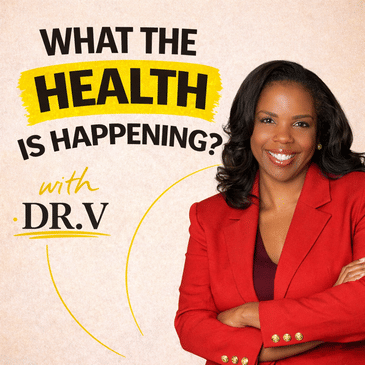
Join Dr. Valda Crowder, a board-certified emergency medicine physician with over 30 years of experience, for a comprehensive discussion on breast cancer awareness.
What You'll Learn:
- Essential facts about cancer: what it is, common symptoms, and prevalence statistics
- Critical information about breast cancer, including the encouraging news that early detection leads to a 99% five-year survival rate
- Expert answers to listener questions covering topics such as:
- Cancer prevention and risk factors
- Hormone replacement therapy concerns and breast cancer risk
- Differences between male and female breast cancers
- Treatment alternatives and options
- The role of lifestyle factors like diet, caffeine, and alcohol
- Genetic risk factors beyond the BRCA gene
- Breast examination techniques for different body types
- Supporting family members through cancer treatment
Key Takeaways: With over 4 million breast cancer survivors in the United States and significant advances in early detection and treatment, Dr. V empowers listeners with the knowledge needed to make informed healthcare decisions and support loved ones facing cancer diagnoses.
Welcome. I'm your host, Dr. Valda Crowder, and you can call me Dr. V. I've been a board certified emergency medicine physician for over 30 years, and I've treated patients from four pandemics, one mass shooting, and a category four hurricane. I've treated almost every medical issue that you could possibly imagine. Since the COVID-19 epidemic, I have taken my expertise to the airways to help thousands of families navigate this crazy healthcare system. So now every Friday at 11 a.m., I'm here to answer your questions from 11 to 12. So we're going to start things off today talking about breast cancer. Specifically, cancer and cancer diagnosis can be sort of the scariest and hardest conversations that you have with your family and also with your physicians. So I hope by the end of the day that people, if they're facing breast cancer or any type of cancer, they've kind of got more tools in their toolbox of things to do and ask and figure out. All right, let's get started. So did you know that one out of every eight women in the United States will be diagnosed with breast cancer in her life? That's actually really a lot. If you know eight women, one of them is going to actually get diagnosed with breast cancer. In 2024, an estimated 310,000 women and 2,800 men were diagnosed with some form of invasive breast cancer. And when you look at it, about 112 women die a day in the United States from breast cancer. That is a woman every 15 seconds. So it is really, really important that we look at what can be done around this. And so there is hope. So first is when breast cancer is caught early and it's localized, the five-year survival rate is almost 99%. There's so many advances in early detection and treatment methods that have significantly made a difference in breast cancer survival rates recently. So we need to really just make sure that we are doing what's necessary to actually catch breast cancer early. So most of my talk today is about prevention and catching it early. Now, if you have some pressing questions about uh about breast cancer, as always, you can also email me questions at info ataskdrv.us, info at askdrv.us. All right, so here are the facts. Let's first talk about cancer in general, because you know, a lot of people know people in their lives that have cancer. And basically, cancer is a group of cells that actually begin to grow abnormally. And they begin to grow in addition to abnormally, so they sometimes grow very fast, and they begin invading the tissue that's near them and disrupting the function of those tissues. So a cancer that's in your lung will not perform as lung tissue, and it starts to actually take over your actual lung tissue, which you actually need to breathe. So, and then this occurs in all different areas of your body. We're talking today about breast cancer, but these cancers begin to metastasize. They often flow through your lymphatic system, and they can go to other areas, they can go to your brain, your liver, your bone, and you'll often hear people say, Well, I have cancer, but it has not metastasized, or I have cancer and it has metastasized. So what are some of the uh symptoms associated with uh breast cancer? And and let me just say this first is that when you actually begin experiencing symptoms from breast cancer, we really want to catch breast cancer before you experience symptoms. You want to catch breast cancer on your regular normal screening exam, which I'm gonna talk a lot about. But for some people, they actually uh do a self-breast exam or they have a mate do a breast exam and they may feel a lump. Uh, there may be some redness, scaling, or thickness of the uh skin of the breast. They may have some skin irritation. They may notice that the nipple is retracted and it's normally out. Um, they also may have some discharge or drainage or pain. Uh in very late stages, you can start to get weight changes. You can lose weight and begin to get fatigued or have um unexpected bleeding or bruising. So these are some of the symptoms of a breast cancer. Um, and if you have these symptoms, you want to get in immediately and actually uh see a physician or provider and actually go through the evaluations you need to determine whether or not what is going on in your breast is actually something that could possibly be cancerous. All right, so let's talk about the risk factors for breast cancer. And let me first say uh smoking, obesity, and a family history of a particular type of cancer is really the three major risk factors for almost any type of cancer, including uh breast cancer. But breast cancer has a couple of other things that are also associated with uh increased risk. The Baraka gene, which many people have heard of because Angelina Jolie actually spoke about the fact that she had that gene. That gene is associated with a very high risk of getting breast cancer and also getting it at a very young age. The other thing that's associated with uh breast cancer is diabetes. People who have diabetes are 50% more likely to get breast cancer. Also, they found in animal models that social isolation and stress also seems to speed up the time at which it takes for the breast cancer to grow. An increased breast cancer risk is also associated with work where your circadian rhythm is thrown off. So things where you work a night shift, or let's say you're a flight attendant and you work between different time zones, these are also things that increase the likelihood of having breast cancer. I often get asked about pregnancy and how does pregnancy impact breast cancer. And so if you've never been pregnant, you have an increased risk of breast cancer, or if you were pregnant after the age of 30, you also have an increased risk of breast cancer. Now, one of the things that's really important is that if you breastfed your child, that actually reduces your risk of breast cancer. So that is very important when you're trying to make the decision of whether or not to breastfeed your child. So breastfeeding a child actually gives you some protective factors against breast cancer. Most women, though, who have breast cancer have no risk factors at all. So the majority of people who get diagnosed with breast cancer really do not have any risk factors. The reason why it's important to know and have a discussion with your docs about whether or not you actually have any risk factors or not, and usually this will be either be an OBGYN doctor or your primary care physician, is because there's different criteria and recommendations for getting mammograms based upon your risk factor. So if in conversation with your physician, you go over your family history, you go over when you had your first child, whether or not you breastfed or not, et cetera, if you actually are determined that you are a high risk, at a high risk for breast cancer, the recommendation is that you actually start screening at the age of 25. And at that age, that you actually get an MRI plus an mammogram every year. This is really important. So a lot of people don't really have this conversation. They assume that they're not high risk, and they may not start their actual uh breast cancer screening until too late. If you and your doctor talk and you guys realize that, hey, you know what, I'm really just of average risk, then you should start getting your mammograms at the age of 40 years old, and you should get a mammogram every two years. Now, what's important is what type of mammogram are you getting? We used to do film mammography, and there are still places that unfortunately do film mammography, but digital mammography is now the standard of care. So when you go in to go get your mammogram, you should ask, is this digital mammography? Digital mammography is much better than film mammography. So what happens with digital mammography is that the photo comes out much clearer. Similar to how a digital photo comes out clearer. In addition to it coming out clearer, it also works well with women that have dense breast tissue, where film mammography often has problems with dense, dense breast tissue. So you really do want to find out when you go get your mammogram, is this a digital mammogram that I am actually getting done? Alrighty. So now it's time to answer your questions about breast cancer. You can also email me at info ataskdrvv.us. That's info ataskdrv.us. Please give me your name, your location, and your question. Does your business believe in the empowerment of the community? Do you want to be part of advancing their understanding of health and overall well-being? Ready to reach more people while growing your brand and visibility with your audience? Maybe you want to help eliminate racial medical disparities. Advertise on the Ask Dr. V show. 30 seconds and one-minute spots are available. Email our team at info atasdrv.us. That's info ataskdrv.us. And find out how you can advertise on the Ask Dr. V show today. We'd love to see how we can work together to reach and empower our audience. All right, we have uh Megan from College Park, and she has a question. She says, I am menopausal and I'm really struggling with hot flashes and mood swings. I've heard good results about hormone replacement pellets helping with these symptoms, but I'm concerned about estrogen causing breast cancer. I've heard conflicting reports. Can you clarify? This is a really important uh question, and you've heard uh different reports because the literature on this has varied significantly over the past couple of years. So, one is that you really want to speak to your physician and go over all of the risk factors for breast cancer. In this show, I just mentioned a couple and determine whether or not you are high risk, moderate risk, or low risk for breast cancer. That is really, really important. The other thing that is important with your physician is to go over, you know, how long have your uh hot flashes and mood swings been occurring. Um, your physician will ask you several questions about when you started menopause, when you started your periods as a child to sort of determine and even do some blood tests, to sort of determine are you sort of in the middle, the beginning, or the end of menopause? And with all of this information together, you all can really talk and make a decision about what to do around hormonal replacement therapy. I will say that the literature is fairly definitive that women should not be on hormonal replacement therapy for long periods of time, with long periods of time being greater than four or five years. The literature is all over the place and controversial for anything that is zero to four to five years. So you really want to sit down and have this conversation with your physician and go over the pros and cons with him. And it is really a decision that is going to be made differently for every person based upon their history and their risk factors for breast cancer. Thank you for asking that question. All right, Steve from Gaithersburg said, My wife had triple negative breast cancer. There are different types of cancers and different stages. Can you explain? So, um, so yeah, there's uh a lot of different types of breast cancer. So, and it's really important for you to know exactly what you have. So, first of all, let me actually explain there the different types of blood, uh, the different types of breast cancer as it relates to um cellularly where it is in your in your breast. So you can have ductal breast cancer, which is in the ducts of the breast. You can also have lobular breast cancer, which is in the lobules of the breast. You can also have a form that's called inflammatory uh breast cancer. So these are just a couple of examples. It's not an exhaustive list, but there are many, many types of breast cancer. So, and it is important to know exactly what you have. Now, Steve, when you're talking about your wife having triple negative breast cancer, triple negative breast cancer is more common in the African American community, and we don't exactly know why. Um, but what triple negative refers to is the hormonal receptors on the actual cancer itself. So breast cancer has estrogen receptors, it has progesterone receptors, and it has human epidermal growth factor receptor too. So those are the three receptors. So if someone is triple negative, that means they don't have either of those three receptors on the breast cancer itself. So why is this important? Because when you look at how we treat breast cancer, we can treat breast cancer by surgically removing it, we can treat it with radiation, and we can also treat it with hormonal therapy. So if you do not have any of these receptors on your cancer, these cancers do not respond to hormonal therapy. So it takes, you know, one of the things that we can use to actually attack the cancer, it takes one of those things away from us. And so that's why triple negative uh breast cancer is so important. Um, again, we see an increased incidence of this in the uh African American community. We're not exercise, we're not exactly certain why, and uh those cancers are uh less likely to respond to hormonal therapy, so it leaves radiation and surgical treatments and other treatments as as a treatment that the physicians have to actually go for for these sorts of breast cancers. All right, thank you very much for this question. Stephanie from Washington, D.C. said, I once saw a woman with cancer who looked like she had been in a fire. What are good alternatives to radiation? All right, so great question. Um, so first of all, there are a lot of women out here that are actually struggling with and fighting to beat cancer. We have about 2.8 million breast cancer survivors in the United States that are alive and actually on this particular journey. Um, so you know, this these are the this is happening in our families and in our our communities. Obviously, the the the most important option is surgical resection. So, surgical resection of the of the of the cancer is literally where they actually cut the cancer out. And your physician will actually talk to you about whether or not you're candidate for surgical resection, and he uh will often refer you to a uh a breast surgeon. Um, other options include irradiation rods. That is where the rods are actually placed inside where the breast maybe breast cancer is. It could be placed uh inside where the breast cancer was taken out. As I said before, we also have hormonal therapy. If the cancer is not uh triple negative, there are various hormonal therapies, and you'll see in the future, we're actually dealing with now a lot of immunotherapy and immunotherapy techniques. And so there are a lot of options, and people have to really kind of create what works for them and works for them in their lives. And and and you also, of course, have chemotherapy. I'm sorry, I forgot to mention chemotherapy, but you also have uh chemotherapy. It is really important that people create a treatment regimen that really works for them. But yes, radiation that is done externally to your body does actually thicken and darken your skin and make you look like uh someone who possibly had uh exposure to a fire, but it actually is um just a result of the radiation and also depends upon how frequently you get the radiation done and for what period of time you get the radiation done. Some people have shorter periods of radiation therapy and they won't see as many skin effects. All righty. Thank you for the question. Next, we have a question from Linda in Chinatown, and she wants to know why do black women seem to die more from breast cancer than other women? All right, great question, Linda. So uh so a couple of things is that um women are black women, African-American women are 42% more likely to die of breast cancer than other uh uh than other women. And the main reason why um we are more likely to die from breast cancer is that we find our tumors too late. And so that is really, really important. I encourage everyone who's listening to me today, ask your family members if they have actually gotten their mammograms. Again, if they're high risk, they should have started getting mammograms at 25 years old. If they're average risk, they should have started getting mammograms at 40 years old. You really want to ask your family members, you know, and tell them how important it is to do this. The other thing is that we find that in general, many times uh African-American women will decide not to take surgical options. Um, and sometimes surgical options, sometimes, not all the time, but sometimes surgical options are the better options. And so you really want to make sure to talk to your physician and know what is the best outcome? How can I get the best outcome? And you want to not just look at one and two year survival rates. You want to ask your physician about 10 and 20 year survival rates, right? I would also ask my physician if I was recently diagnosed with cancer, well, if I was your mother or sister, what would you recommend? If I if I were your family member, what would I recommend? Many physicians will give you their honest opinion about that if you ask them directly and see what they say. The other thing that we find is that once breast cancer is found, African American women get treatment more delayed. So, you know, how quickly do you get in after being diagnosed with really any type of cancer, but particularly breast cancer, since we're talking about that today? How quickly do you get into the oncologist? How quickly do you get into the uh breast cancer surgeon? 69% of black women get into treatment within 30 days. 82% of white women get into treatment within 30 days. So you want to make sure that if you're recently diagnosed with cancer, that you get into treatment and you start and you get those appointments within 30 days. If you do not get those appointments within 30 days, you need to complain. And specifically, consider going to another physician or another office or whatever you need to do to actually get your treatment started as soon as possible. It is really, really important in breast cancer to actually get the diagnosis early, and then once you get the diagnosis early, to begin treatment early. Thank you for that question. Okay, this is Dr. V, and here is some news that you can actually use. As you guys know, this is some this is a segment where I give you the down low and real hot topic health issues that you can apply to your life in a practical way now. So in this week's news you can use, we are talking about how the new FDA requirements could actually help identify more breast cancer. So, one of the things that makes it difficult to actually identify breast cancer is when a woman has dense breasts. And that's basically where the tissue is very dense and very compact in the breast. So most women don't know that they have dense breasts. So when they get their mammogram, they just read the mammogram and they don't tell them whether or not they have dense breasts or not. So the new FDA requirement, when you get your mammogram report, is going to say you have dense breasts. So what is the importance of that? So one is if you have dense breasts, you're more likely to develop breast cancer. The other thing is if you have dense breasts, you're more likely for the mammogram to not be able to see the breast cancer. So sometimes, if you have extremely dense breasts, you may actually have to have other studies in addition to a mammogram, such as possibly an ultrasound or an MRI. So when you get this mammogram report, you will see at the bottom of it, if you have dense breasts, you will actually see a notice that says you have dense breasts. This mammogram may not be sufficiently adequate to determine whether or not you have breast cancer. If you see this notice on your report, it is very, very important to talk to your physician about whether or not you need alternative screening modalities to actually determine if you. Have breast cancer. All right. Raquel from uh Capitol Hill emailed me and she said, My old boss was vegan, and he used to tell me that sugar was the devil. Can sugar cause cancer? So this is a this is a very interesting question. What I will say is a couple things is that increased amount of sugar or carbohydrates in one's diet normally leads to obesity. And obesity is a risk factor for developing cancer. We also know that cancers feed off of sugar or carbohydrates. So we know that for a lot of cancers, diabetics have a higher mortality rate. And as I said earlier in this conversation, uh diabetics specifically are 50% more likely to die of breast cancer. So in general, um, if you want to decrease the likelihood of getting breast cancer and you want to decrease the likelihood of it being lethal, you would limit but not eliminate, because obviously we need carbohydrates and sugar for energy in our bodies, you would uh limit but not eliminate um carbohydrates. And that could be in the form of alcohol, because alcohol is also associated with uh increased risk of breast cancer and other forms of cancer. And so it doesn't matter whether or not we're talking beer, wine, or just desserts in general. Excessive carbohydrates and excessive sugars in the diet uh lead to obesity, they also lead to increased risk of cancer, particularly breast cancer, and they also increase lethality of cancer. So it is really important. I also think that it is important before you actually change your diet, speak with a nutritionist so a nutritionist can help guide you, make healthy choices. You don't want to replace something that is unhealthy with something that is even more unhealthy. So it's really important to actually speak to a nutritionist and actually get professional guidance on how to actually make your diet healthier. Thanks for the question. All right, we have a question from Lynn from Columbia, Maryland. She wants to know what is the most effective non-invasive treatment therapy for breast cancer? So, uh, great question, Lynn. Unfortunately, there is not a single treatment that is actually the best treatment. It really, really depends upon what sort of cancer you have. So I go back to like, you really, really have to know do I have ductal carcinoma, do I have low bar carcinoma, do I have inflammatory carcinoma? Also, do I have nodes that are positive? Do I have metastatic disease? Do I have any of my hormone receptors? Or are there hormone receptors on this cancer? So it is really, really important. Every single cancer is categorized like that. And there are probably about 40 or 50 different categories of cancers for the breast. So there's not one particular therapy that is non-invasive that is actually the best therapy. But I will tell you that it is really important to really give serious consideration to surgical options as well as non-invasive options. And that is, again, a conversation to have with your physician to go over it. But I also think it's important, once you actually know the name of your cancer, if you have been diagnosed with cancer, you want to write it down, take a picture of it on the phone, so that that way you can go back and actually research your specific type of cancer. Because not all of these cancers are the same, even though they're all considered to be breast cancers, they operate and act very differently and they respond to therapies very differently. So there's no one treatment that is actually good for all of them. Thank you for the question. Amy's question is as follows. She says that she has a family member that was recently diagnosed with breast cancer, and it is a very late-stage breast cancer. It has been metastasized to the lungs and the bone. And she wants to know are there any clinical trials that would be helpful for her family members and how would she, her family member, and how would she find them? So this is a really great question. So again, this goes back to why it's really, really important to know the type of cancer you have, whether you're not you've got ductal cancer, whether you're not getting nodes positive, what your hormone receptors are, etc. So there is a website that is put together by NIH and it specifically catalogs all of the clinical trials for almost every disease that is imaginable. It is a government website. It's called clinicaltrials.gov. That's clinicaltrials.gov, and clinical trials is with an S. So it's C L I N like a Nancy I C A L T-R-I-A-L-S.gov. Clinicaltrials.gov. So when you go into that website, it specifically asks you what is the condition or disease. So you've got to know I've got ductal carcinoma of the breast, or I've got lobular breast cancer, or I've got inflammatory breast cancer. And it'll say, it may say what intervention or treatment are you looking for. You can leave that blank. And it'll also say location. You may have locations where you live, or you may have locations where other family members live. Often physicians may not know of what's happening in a different state. If if that hospital that you're going to, they may not, they may not be aware. So it's very important for you to go to clinicaltrials.gov and you can actually then look it up. So when you put this in, it'll bring up all of the clinical trials that are going on that are related to your particular disease. And then it will tell you these trials are open to new patients. Here are the criteria to enter into this clinical trial. If you see something that you think actually applies to you and actually looks interesting, you can bring this information into your physician's office and ask him, Do you know about this clinical trial? Is this something that you think would be good for me? You also want to ask, have I exhausted all standard therapy? Or is there standard therapy that could still make a difference in the progression of my cancer? So you really want to make sure to have a really robust conversation with your provider. And you also want to make sure that you're looking at things like clinical trials if you have exhausted standard therapy and you want to look at other things that might be available to save your life. I think that's really, really important. So uh thanks for the question. Susan asked, we know there are genetic risk factors like the BRACA gene. Are there other genes that we need to be aware of? Absolutely. So I I know there's a lot of conversation and primarily because of you know celebrities that have uh come out and actually said that they have the BROCA gene. But there are a lot of genes that are associated with uh breast cancer. And as we um further actually delve into the DNA genome, we're finding more and more and more things. So just to give you a couple of them, this is not an exhausted list, uh, but there are high-risk genes, there are moderate risk genes, and there are genes that uh increase your risk of breast cancer, but only by a low level. I'll go over the high risk and the moderate risk. So the high risk genes, there's TP53, PALB2, P10, which is P, and then the word 10, STK11, and CDH1. For moderate risk genes, there's ATM, CHEK2, which is CEC2, and BRP1. So most of these genes you've never really heard of. And it's like, what do you really need to do with this information? I think what's important is to ask your doctor, can you get genomic testing to see whether or not you have any high risk or moderate risk genes? It's less important to know the name of them. It's more important to get the uh DNA testing and have your doctor actually test you for um any genes associated with any diseases that we may know of. So that way you can appropriately plan uh for whatever may be in your future and kind of know that I'm at high risk for this, so I really need to watch out for this particular thing. And so I encourage everyone, if you haven't actually done that, uh to consider getting that and having that conversation with your primary care provider. Thank you for the question. All right, Laura from Suitland. Uh she said that uh she has a question here and she emailed this to me. Her question was cancer is hard on the entire family. How can you help someone who's constantly in pain? Uh so, so, so Laura, this is a really, really great question because um it can be really, really stressful as you um advocate and take care of a family member with cancer. Um, in addition to them being in pain, um, you'll often see them, you know, lose the ability to do things that they may have normally, that they may have normally done. A couple of things that are important is that a lot of hospitals and also the American Cancer Society, they have a lot of uh support groups and resources for families that are taking care of cancer loved ones. Um and I think that it's really important to um tap into some of these resources. I recommend that everybody go to the American Cancer Association's website if they're dealing with someone who has cancer. Also, whatever hospital uh or oncologist that they're going to for care, specifically ask for where are some resources or support groups that you can sort of tap into. The other thing that is important is to make sure that their pain medication and their other medications are actually being uh optimized. Ask about what you can actually do. The other thing that is really important is that taking care of an a sick or elderly loved one can be very stressful. There are support services like meals on wheels, sometimes there's respite care. Uh, some people qualify for home health coming in and assisting. So make sure that you actually ask the questions and speak to the social workers and speak to uh the oncologist about uh support groups and resources that you can actually that you may qualify for and you don't even know you qualify for it because you really wanna, this is something that takes a village. When you are dealing with a family member that is sick from any type of cancer, this is something that really, really takes a village to help them actually journey through and hopefully journey through successfully. Thanks for the question. We've got Raquel and uh Raquel has a question. She says, I'm a big coffee drinker, but when I went to the doctor due to breast soreness, she said it was probably from the caffeine. That's a problem because I really like my coffee. Can you give me some options that include coffee and less breast tenderness and tell me why caffeine or coffee causes this? Okay. A couple of things. Um, so it's definitely the caffeine in the coffee, right? So uh caffeine is a stimulant, and basically what it does is it it de it it can increase the blood flow and cause your blood vessels in your body to dilate. And that increased blood flow then can lead to some swelling and some discomfort in your breast. Um, the other thing is that caffeine also affects the levels of hormones in your body, um, such as estrogen. And if your breast tissue is sensitive to hormones, then that also can make it particularly sensitive. Um those hormonal fluctuations and and how it relates to caffeine, you may notice that it differs based upon where you are and your menstrual cycle. Um, the other thing is that you have women who have sort of fibrocystic changes to their breast and their breast tissue is very dense. Caffeine can actually make this uh worse. Um and then lastly, uh caffeine in general is a diuretic. So people notice that when they drink coffee or drink caffeine, um, they go to the bathroom, they urinate more. And so the dehydration can also um cause tenderness and and swelling in the breast. So all of these things are why caffeine can actually do this. The the options that you have is to really get decaf coffee. Get whatever products you like and get it in the decaf version. And so there really isn't any other option other than actually decreasing the amount of caffeine that you actually are consuming. So I don't know if you're someone who drinks multiple cups of coffee in a day, but you want to switch over to decaf for whatever your favorite uh coffee is, if you are actually getting uh breast soreness and breast tenderness as a result of that. In addition, what you want to do is you want to make sure that you've had a mammogram and you're not assuming that it's the caffeine. Um again, I don't know what your risk profile is like. If you're at high risk and you're over 25, you need to make sure that if you're having breast soreness that you're actually getting a mammogram, a digital mammogram. And if you're um of you know low risk or average risk, if you're over 40 that you're also getting a digital mammogram. Don't assume that it's the caffeine uh just because your physician said it, but caffeine can cause breast soreness. But I would personally make sure I had a mammogram and make sure that everything more dangerous was ruled out before I determined that that is the actual cause. All right, thank you for the question. Johnny from Greenbelt uh sent in a question, uh, and he says, uh Doc, this may seem like a silly question, but I'm gonna ask it anyway. When it comes to breast cancer, does size matter? In other words, are larger breasts more susceptible to breast cancer? So, very good question. Uh so in general, uh the size of one's breast does not make it more susceptible to breast cancer. However, what we have found is that there are women that have dense breasts, so the tissue is very dense. They could have large breasts or small breasts, but the tissue itself is very dense and it shows up as very dense on a mammogram. And if someone has dense breasts, it does make finding the cancer a little bit more difficult. And sometimes those women have to get alternative imaging. So in general, the size of the breast doesn't matter. Great question. All right. Julie from Columbia is asking: are there facts that a lot of people don't know about breast cancer that would be important to know? It seems like there's a lot of the same information, but we don't really get all of the information. So can you share with us some important facts to know that maybe we don't hear about commonly? All right. So yeah, I can ask, uh I can answer that. Uh so a couple of things. A lot a lot of folks talk about finding a lump in your breast, but most breast cancer has absolutely no symptoms. So even though it is important, it is important that, you know, if you feel a lump to get the lump examined and imaged properly, um, I don't want people to think that I think sometimes it leads to an impression that if there's no lump, you're fine. And that's just simply not true. Um breast cancer often does not come with any symptoms whatsoever. Sometimes it can come with just an inversion of a nipple or some warmth or itching, or as I said, sometimes it can come with nothing at all, which is why it's really, really important for women to get the screening at the appropriate age. Um, the other thing that uh I discussed earlier and we don't often hear about is men with breast cancer. So I talked a little bit about that earlier in the programming, but if you have a male relative, particularly like a father or a brother that had breast cancer, you are even at a higher risk of having breast cancer than if you had like a mother or a sister having breast cancer. So a male relative with breast cancer is really, really important to tell your physician about. The other thing I would say is that um a lot of people don't realize the importance that um maintaining a good weight uh impacts cancer in general. So being you know overweight or obese in general increases all cancer risk, not just breast cancer, but almost any uh cancer risk. So if you want to really stay away from uh having cancer, you really want to try to uh maintain a healthy weight. And lastly, I would say that, you know, for those that uh drink alcohol daily, drinking alcohol daily is something that also increases uh most cancer risk, but it also increases the risk of uh breast cancer. So I'm not talking about a glass of wine now and again, that's not what I'm talking about. I'm talking about when people have several glasses daily. So those are the things that I think that people often don't talk about that are really important around uh breast cancer. So uh thanks for the question. Candy from Philly uh she sent in a question and she said, after I had my kids and breastfed, my breast drooped in a major, major way. I've been thinking about getting breast implants to bring my sexy back. Do you think implants are safe and are there safer alternatives? So let me just say uh from uh from the from the beginning, uh I am not a fan of any sort of implants into your body that are not medically necessary. You know, if you need implants for a particular medical reason, but just for cosmetic reasons, um, any sort of uh foreign tissue or foreign objects in your body can cause certain problems. So to answer your question is in general, breast implants can make it more difficult to actually find the breast cancer in when you do a mammogram. So that it definitely makes it harder. It doesn't make it impossible, but again, the implants can obscure some breast tissue from the mammograms, particularly if they're placed in the front of the chest muscles. So the other thing though, I think that is important in general about uh implants is there's a lot, there can be a lot of health risk associated with them. There are some implants that are made out of silicone or have silicone fluid in them to make them more like a real breast tissue, and there are others that have water, water in them as opposed to silicone. So these things can rupture and leak. And obviously, if they rupture and leak and they're leaking silicone uh into your body, that can that can cause significant uh health risk. The other thing is that some people are we're seeing now what they call breast implant illness, which is where women begin to report fatigue, joint pain, memory issues. We've also seen anaplastic large cell lymphoma, um, and then of course just regular infection and pain as a result of the surgery that they had. So I am not, I am not at all in favor of breast implants, and they can make breast cancer more difficult to detect. Thanks for the question. All right, we've got a question from Brigitte from Annapolis. She said, Dr. V, I did not catch my lump in my breast. My husband did. Can you speak on the importance of how intimate relations can help save lives? So this is actually a really great question because husbands are really good at form at doing breast exams. So one, they enjoy doing them, and two, they remember what it felt like last time. So I think that it is really, really important that your husband do your breast exam. And it is, we often, I've often had patients come in where their husband found the lump or found something that was different. So if you are uh in a relationship with a significant other, I think it this is really important. It's fun to do, and uh it also can make a difference. It really can make a difference in detecting uh breast cancer early. Thanks for that question. All right. Johnny from Greenbelt uh sent in a question, and he says, uh Doc, this may seem like a silly question, but I'm gonna ask it anyway. When it comes to breast cancer, does size matter? In other words, are larger breasts more susceptible to breast cancer? So, very good question. So, in general, the size of one's breast does not make it more susceptible to breast cancer. However, what we have found is that there are women that have dense breasts, so the tissue is very dense. They could have large breasts or small breasts, but the tissue itself is very dense and it shows up as very dense on a mammogram. And if someone has dense breasts, it does make finding the cancer a little bit more difficult. And sometimes those women have to get alternative imaging. So, in general, the size of the breast doesn't matter. Great question. All right, Julie from Columbia is asking are there um facts that a lot of people don't know about breast cancer that would be important to know? Um it seems like there's a lot of the same information. Information, but we don't really get all of the information. So can you share with us some important facts to know that maybe we don't hear about commonly? All right. So yeah, I can ask uh I can answer that. Uh so a couple of things. A lot a lot of folks talk about finding a lump in your breast, but most breast cancer has absolutely no symptoms. So even though it is important, it is important that, you know, if you feel a lump to get the lump examined and imaged properly, um, I I don't want people to think that I think sometimes it leads to an impression that if there's no lump, you're fine. And that's just simply not true. Breast cancer often does not come with any symptoms whatsoever. Sometimes it can come with just an inversion of a nipple or some warmth or itching, or as I said, sometimes it can come with nothing at all, which is why it's really, really important for women to get the screening at the appropriate age. Um, the other thing that I discussed earlier and we don't often hear about is um men with breast cancer. So I talked a little bit about that earlier in the programming, but if you have a male relative, particularly like a father or a brother, that has that had breast cancer, you are even at a higher risk of having breast cancer than if you had like a mother or a sister having breast cancer. So a male relative with breast cancer is really, really important to tell your physician about. The other thing I would say is that um a lot of people don't realize the importance that maintaining a good weight impacts cancer in general. So being, you know, overweight or obese in general increases all cancer risk, not just breast cancer, but almost any uh cancer risk. So if you want to really stay away from uh having cancer, you really want to try to uh maintain a healthy weight. And lastly, I would say that, you know, for those that uh drink alcohol daily, uh, drinking alcohol daily is something that also increases uh most cancer risk, but it also increases the risk of uh breast cancer. So I'm not talking about a glass of wine now and again, that's not what I'm talking about. I'm talking about when people have several glasses daily. So uh those are the things that I think that people often don't talk about that are really important around uh breast cancer. So uh thanks for the question. Candy from Philly uh she sent in a question and she said, after I had my kids and breastfed, my breast drooped in a major, major way. I've been thinking about getting breast implants to bring my sexy back. Do you think implants are safe and are there safer alternatives? So let me just say uh from uh from the from the beginning, uh I am not a fan of any sort of implants into your body that are not medically necessary. You know, if you need implants for a particular medical reason, but just for cosmetic reasons, um any sort of uh foreign tissue or foreign objects in your body can cause certain problems. So to answer your question is in general, uh breast implants can make it more difficult to actually find the breast cancer in when you do a mammogram. So that it definitely makes it harder. It doesn't make it impossible, but again, the implants can obscure some breast tissue from the mammograms, particularly if they're placed in the front of the chest muscles. So the other thing though, I think that is important in general about uh implants is there's a lot, there can be a lot of health risks associated with them. There are some implants that are made out of silicone or have silicone fluid in them to make them more like a real breast tissue, and there are others that have water, uh water in them as opposed to silicone. So these things can rupture and leak. And obviously, if they rupture and leak and they're leaking silicone uh into your body, that can that can cause significant uh health risk. The other thing is that some people are we're seeing now what they call breast implant illness, which is where women begin to report fatigue, joint pain, memory issues. We've also seen anaplastic large cell lymphoma, um, and then of course just regular infection and pain as a result of the surgery that they had. So I am not I am not at all in favor of breast implants, and they can make breast cancer more difficult to detect. Thanks for the question. All right, we've got a question from Brigitte from Annapolis. She said, Dr. V, I did not catch my lump in my breast. My husband did. Can you speak on the importance of how intimate relations can help save lives? So this is actually um, this is a really great question because husbands are really good at form at doing breast exams. So one, they enjoy doing them, and two, they remember what it felt like like last time. So I think that it is really, really important uh that your husband do your breast exam. And it is, we often, I've often had patients come in where their husband found the lump or found something that was different. So if you are uh in a relationship uh with uh a significant other, I think it this is really important. It's fun to do, and uh it also can make a difference. It really can make a difference in detecting uh breast cancer early. Thanks for that question. When we return, we will hear from comedian Damon Williams and we will get his take on today's topic about breast cancer. Does your business believe in the empowerment of the community? Do you want to be part of advancing their understanding of health and overall well-being? Ready to reach more people while growing your brand and visibility with your audience? Maybe you want to help eliminate racial medical disparities. Advertise on the Ask Dr. V show. 30 seconds and one-minute spots are available. Email our team at info at askdrv.us. That's info ataskdrv.us, and find out how you can advertise on the Ask Dr. V show today. We'd love to see how we can work together to reach and empower our audience. Hey Damon, so what do you think about today's topic? We've been having a real in-depth conversation over here about breast cancer that I hope will actually really help our community uh save lives. Here is today's edition of comedian Damon Williams. This is what I think.
SPEAKER_00Hey, it's Damon Williams, and I think it's time to talk about breast cancer. In fact, I think it's time that men talk more about breast cancer. Because believe it or not, it's a little known fact that men can actually catch breast cancer. Yes, I know, fellas, we don't have breasts per se, but we are susceptible to breast cancer. So I think in order to raise not only awareness, but to raise more money, is we can get more men involved. Now, breast cancer awareness month, it's not appealing as much to men as it should be. So maybe we need to add another element and make men more involved or more intrigued with this scenario. So I think at some point we need to change the slogan or add the slogan, save them boobies. That's right, save them boobies will get men's attention, men will perk up, no pun intended, and men will become involved. Now, right away, I know there's some ladies listening to this and saying, Oh, like we need men to save us. No, that is not what I'm saying. What I'm saying is you need everyone involved, and men have money and power to assist in your cause. So let's get those t-shirts going. Save them boobies. Let's get that slogan going. Save them boobies. Because me being a booby man, I would definitely reach in my pocket quicker if I saw save them boobies. That's a cause I can get behind. Now, it might not be right, it might not be true, but that's what I think. Follow me at Damon Williams Comedy on Instagram, and my website is damnwilliamscomedy.com.
SPEAKER_01Well, folks, that is a wrap. I have really enjoyed talking to you today. This is such really, really important information. Please make sure to share this information. Please ask your family members whether or not they've gotten their digital mammograms. We need to really be about saving lives out here. I want to thank you for joining me on this conversation about breast cancer. Be sure to email me and send me any questions you have or if you actually have any ideas for a show or if you have a business and you want to advertise on this show. I can be reached at info at askdrv.us. That's info at askdrv.us. So be sure to email me and reach out to me. You can also follow me on Twitter and Instagram at askdr underscore V. That's at askdr underscore V. ASKDR underscore V. We'll be here next week for another interesting topic right here where you can be informed and empowered about your health and help your community.